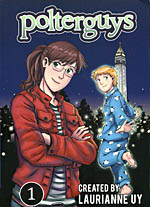
Polterguys Vol. 1

Written by Laurianne Uy and Nathan Go
Art by Laurianne Uy
192 pages, black and white
Published by Mumo Press

Laurianne Uy and Nathan Go’s Polterguys Volume 1 was one of those books that randomly showed up in my mailbox one day. I’m always a sucker for a book that won a Xeric Grant, and with the foundation having handed out its final publishing grants, getting hold of one of those books was a pleasant surprise. What I found was a book that clearly gets its main inspiration from certain manga tropes, but also adds enough of its own twist to keep it from being too predictable.

Read the rest of this entry »

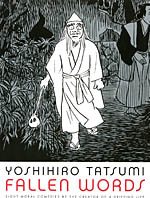
Fallen Words

By Yoshihiro Tatsumi
288 pages, black and white
Published by Drawn & Quarterly

Yoshihiro Tatsumi’s career as a manga creator is long and varied; originally known for helping create the "gekiga" alternative manga genre in the ’40s and ’50s, and then bursting back onto the scene a few years ago with his enthralling autobiography A Drifting Life. With Fallen Words, his new short story collection, Tatsumi addresses an old Japanese storytelling technique and group of long-standing stories (called rakugo) by shifting them from performance art into a comics page. And once again, Tatsumi shows the reader that he’s still got the skill and craft that’s made him an important craftsman of manga all these years.

Read the rest of this entry »

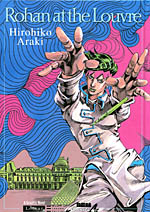
Rohan at the Louvre

By Hirohiko Araki
128 pages, color
Published by NBM

I’ve always loved the fact that the Louvre art museum in Paris has been commissioning a series a graphic novels set within and around the famed museum. Each one’s had a different take on the idea (my favorite is probably Museum Vaults by Marc-Antoine Mathieu) but they’ve all been good. With Rohan at the Louvre, the Louvre has hired a manga creator to tackle the subject. And what we got was not only able to stand out in its own right, but strong enough that now I want to read more comics by Araki.

Read the rest of this entry »

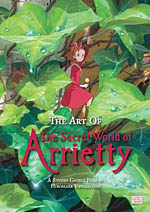
Art of the Secret World of Arrietty

By Studio Ghibli and Hiromasa Yonebayashi
200 pages, color
Published by Viz

As much as I love Studio Ghibli’s films, occasionally they’ll sneak past me in the movie theatres. That was the case with The Secret World of Arrietty, an animated movie based on the novels of The Borrowers that was released in North American earlier this year. While I continue to wait for a DVD release, though, I’ve found that yearning at least partially satiated by The Art of the Secret World of Arrietty, a book detailing the artistic creation of the film.

Read the rest of this entry »

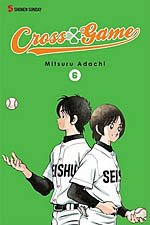
Cross Game Vol. 6

By Mitsuru Adachi
376 pages, black and white
Published by Viz

With the wealth of manga being published in North America right now, it’s almost impossible to pick a favorite. Were I forced to narrow it down to a top ten or even top five current series, though, there’s no doubt in my mind that Cross Game would be on the list. Mitsuru Adachi’s series has done the seemingly impossible right from the beginning—create a series about baseball interesting—and with this new volume, he’s taken it a step further. He’s taken one of the most time-honored manga romantic clichés, the new rival introduced around the two-thirds mark, and made the situation engrossing.

Read the rest of this entry »

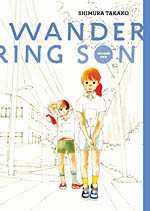
Wandering Son Vol. 2

By Shimura Takako
200 pages, black and white
Published by Fantagraphics

The first volume of Wandering Son, published in the middle of last year, was an intriguing look at two teenagers who both are trying to figure out their own gender identity and their place in the world around them. Fantagraphics released the second volume at the end of the year, and with a lot of the set-up completed, Shimura Takako’s story takes a stronger step forward here. Everything I liked about the first volume is still present, but any issues I’d had with it feel like they’ve been erased as her story progresses.

Read the rest of this entry »

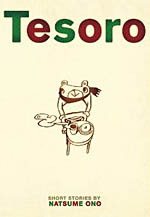
Tesoro

By Natsume Ono
248 pages, black and white
Published by Viz

Natsume Ono is a comic creator who, much to her credit, has no problem leaping from one subject to the next; one minute it’s samurai stories like House of Five Leaves, the next it’s romantic drama at a restaurant, or a young man trying to figure out questions of family and identity. I was delighted as a result to find out about Tesoro, a collection of Ono’s short stories. In doing so I found confirmation that while the plots are often different, there are definitely some threads that run through her works.

Ono writes a lot about loss and family. Missing parents are often elements in these shorts, and it’s to Ono’s credit that each character feels different in their own way, no matter what they’re going through similar to ones in different stories. Even when there’s no particular loss, like in "Froom Family," Ono still understands the hold that family members have on one another; there’s no way that young Nils could get the same amount of anguish from people that weren’t his sisters, able to get under his skin just so. Italy also crops up several times here, a favorite setting of Ono’s, but she often uses it as little more than a backdrop. Ono’s enchantment and fascination with the country none the less rubs off on the reader; I’d have expected to start groaning, "Oh no, not another story set in Italy" but instead I found myself hoping for one more glimpse. My favorite piece in the book, though, is probably "Three Short Stories About Bento." The three stories have little connection other than being about the Japanese lunch boxes, but each of them managed to both give a glimpse into Japanese culture and also bring their characters to life better than some full-length books I’ve read. Add in Ono’s trademark scratchy, loose-lined style, and you end up with a charming sampler from Ono. With 14 stories, even if you (like myself) find a small number to not quite be up to par, there’s more than enough here to keep you entertained for quite some time.

Purchase Links: Amazon.com | Powell’s Books

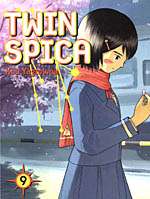
Twin Spica Vol. 9

By Kou Yaginuma
272 pages, black and white
Published by Vertical, Inc.

With so many manga series being translated into English these days, it’s easy for ones to get lost in the shuffle; doubly so when it comes to ones that aren’t on their first or second volume. In the case of books in Twin Spica, it would be a genuine shame if it became forgotten. Not only is this 12-volume series about a Japanese space academy charming, but its ninth volume is almost certainly its strongest installment to date.

Read the rest of this entry »

X 3-in-1 Vol. 1

By CLAMP
584 pages, black and white
Published by Viz

X is a strange little duck in the manga world, in terms of its publication history. Created by the four-person creative collective CLAMP, X began in Japan in 1992, but was halted in 2003 as it neared its conclusion due to concerns by the publisher over the "increasingly violent stories." Meanwhile, in North America, due to Dark Horse Comics’ series X, its publication by Viz ran under the name X/1999, referencing the pivotal year in which the series was set. It’s now 2011 and CLAMP hasn’t found a new publisher in Japan to run the final chapters of X, but the series is now coming back into print in North America in a series of 3-in-1 omnibuses, and under its original title of X. As the comic focuses around the apocalypse, saying "the end is near" is extremely appropriate no matter how you look at it. And based on what I found in X 3-in-1 Vol. 1? I am a little boggled at the idea how just how violent these later chapters must be.

Read the rest of this entry »

Stargazing Dog

By Takashi Murakami
128 pages, black and white
Published by NBM

Stargazing Dog is the kind of book that will either grab you instantly with its cover, or make you run screaming. For me, there’s something instantly attractive about an image of a cute dog in a field of sunflowers that made me want to read this comic that was a runaway success in its native Japan. What I found inside, though, was a strange duo of stories about the relationship between men and dogs. It’s bittersweet, but I appreciated that it didn’t take the easy way out.

Read the rest of this entry »